Walk from Frick Park Market on Reynolds Street to Enson Market on Thomas Boulevard and you'll cover about ten minutes on foot, most of it along the edge of Frick Park itself. Both are grocery stops. Both anchor a corner of Point Breeze. And both have been in the local news this year for reasons that have almost nothing to do with each other.
One got there through a city facade grant that helps keep a 124-year-old building standing. The other got there through a private redevelopment deal that turned an old industrial plant into a 40,000-square-foot commercial building without needing public money at all. Once you notice which is which, the rest of the neighborhood's storefronts start reading differently too.
The deli the grant program was built for
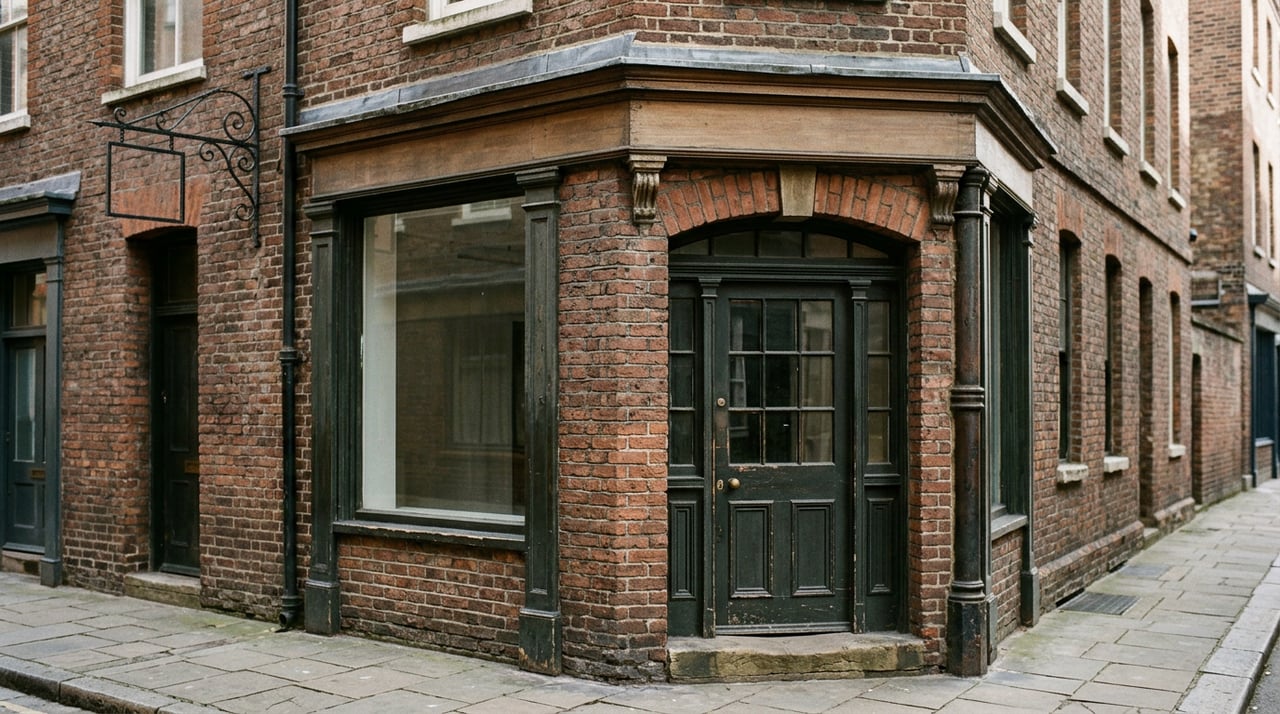
The building at 7103 Reynolds Street has been a market since 1902, though it didn't become Frick Park Market until 1940. David and Katie Gancy took over the business in 2021, financing the purchase in part through a $385,000 loan from the Urban Redevelopment Authority's Pittsburgh Business Fund program, after conventional bank loans and CDFIs couldn't close the gap. David had already worked with the URA once before, on his Oakland restaurant Red Oak Café, which is part of why the agency's lending team knew what they were backing.
This summer, the Gancys received a Commercial Facade Grant through the city's expanded storefront program, the same initiative Mayor Corey O'Connor announced was growing from an initial $500,000 commitment to $1.13 million, spread across 77 small businesses citywide. The money goes toward maintaining a building that's now well over a century old and doubles as an unofficial pilgrimage site: Mac Miller wrote and filmed the video for his song "Frick Park Market" at the store, and fans still stop in to see the place in person.
None of that is incidental to the funding story. A building this old, with this much foot traffic from people who aren't there to buy anything, needs public money to stay upright in a way a new build doesn't. The grant isn't charity. It's the city recognizing that some commercial buildings carry a kind of civic value that the rent roll alone won't cover.
The grocery store that didn't need the same kind of help
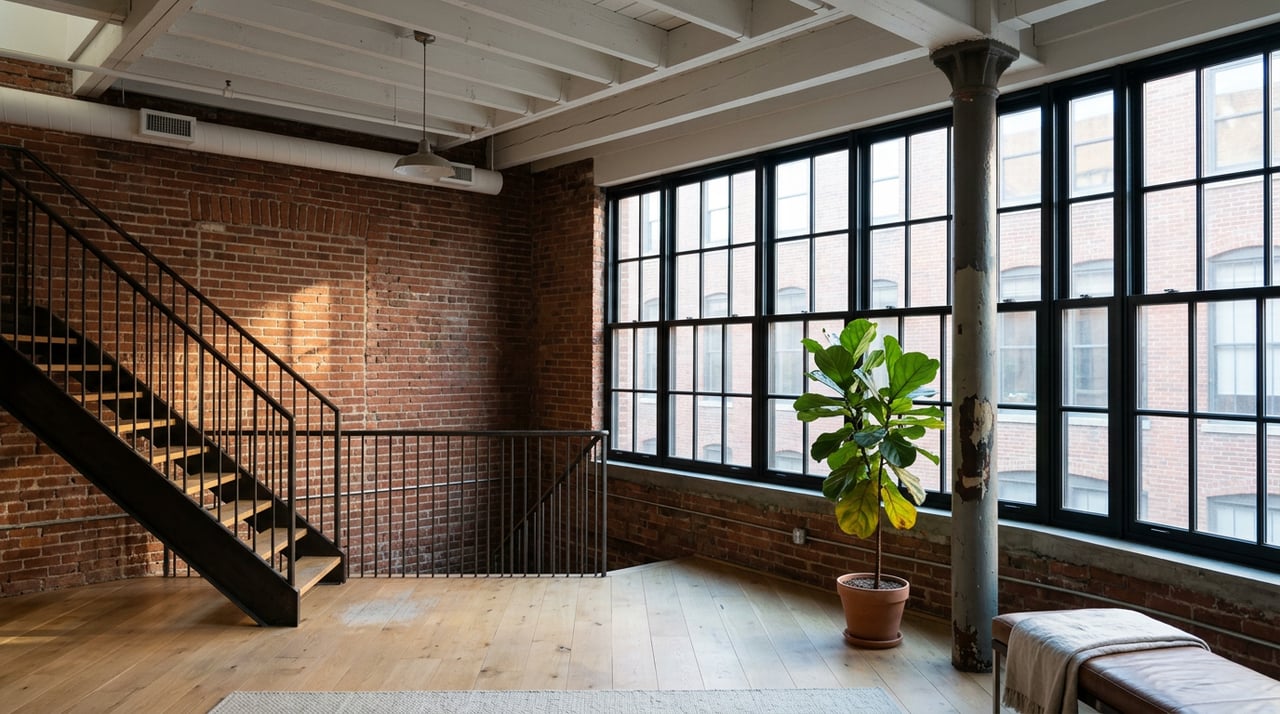
A ten-minute walk away, Enson Market opened on June 6, 2025, inside the Apollo Building at Rockwell Park, a converted industrial site that Emerson Electric once used to manufacture heating elements. ForeFront Development Group, led by Chad Wheatley, took on the 1906 building in a renovation originally scoped at up to fifteen months, and the project moved forward as a private redevelopment bet on Point Breeze North, not as a preservation project with public backing.
The store had a long runway to get there. Fresh International Market, as it was called before the Enson rebrand, was first announced for Pittsburgh in March 2023 with a Summer 2024 target, then slipped to February 2025, then May 30, then finally landed on June 6. Every delay showed up in local coverage from PennsylvAsia, which tracked the project from announcement to soft opening. Inside, Vietnamese coffee shop Ineffable Cà Phê took a second location alongside the grocery, having run its original Lawrenceville spot since 2017.
The contrast isn't about which business is "better." It's about which kind of continuity each one represents.
| Frick Park Market | Enson Market | |
|---|---|---|
| Building age | 124 years (1902) | 120 years (1906), fully converted |
| Funding path | URA loan + city facade grant | Private redevelopment (ForeFront Development Group) |
| What it preserves | A specific building and a specific business | A specific site's commercial use |
| Business model | Independent deli, same footprint since 1940 | Chain grocery format, new to the region |
Neither column is more legitimate than the other. But a reader who assumes every new storefront in Point Breeze is riding the same wave, or that every old one is simply hanging on, is going to misread what's actually happening block by block.
A few blocks won't tell you the whole story either
An Aldi opened in August 2025 at 7401 Penn Avenue, just over the line in Wilkinsburg, replacing a Giant Eagle that had sat vacant since 2021. It's close enough to Point Breeze North that plenty of residents will treat it as part of the same shopping loop, even though it isn't technically in the neighborhood. That's worth knowing if you're trying to map what's yours and what's next door, since Point Breeze North sits right against Wilkinsburg along this stretch of Penn Avenue.
Not every recent change in the neighborhood is a grocery story, either. Paper & Dirt PGH, the small curated newsstand that had operated out of a Point Breeze storefront, let its lease run out on December 31, 2025. The shop had hosted film screenings, a zine fair, a winter walking book club, and the start line for the Filthy Five race, the kind of small-format community programming that doesn't show up in commercial real estate filings but shapes how a block actually feels on a Saturday. Rather than closing, the newsstand's curated shelf relocated inside KLVN Coffee Lab on Hamilton Avenue, where it now keeps hours seven days a week year-round. That's neither a grant story nor a redevelopment story. It's a small business right-sizing into a space that gets more consistent foot traffic, which is its own kind of continuity, different again from what's happening at Reynolds Street or Thomas Boulevard.
Through all of it, Point Brugge Café has just kept going. The Belgian-inspired bistro opened on Point Breeze's restaurant row in January 2005 and is still there over twenty years later, the kind of fixture that doesn't generate headlines precisely because it hasn't needed a grant, a redevelopment deal, or a relocation to stay open.
Reading your own corner of it
If you live in Point Breeze or Point Breeze North, the practical takeaway isn't which grocery store to prefer. It's a way of watching the neighborhood that holds up better than "old is fading, new is winning." Some of what's old here is old because the city is actively paying to keep it that way. Some of what's new here is new because private capital saw an empty industrial building and made a bet on it. Some of what looks like a closure, like Paper & Dirt's storefront ending, is really a business finding a better-trafficked home two blocks over.
None of those are the same story, even when they're happening within walking distance of each other and even when they all show up in the same "what's new in Point Breeze" roundup. Knowing which mechanism is behind a given change tells you something the change itself doesn't: whether it's the kind of thing that needs continued public or community support to last, or the kind of thing that's already built to stick around on its own.
That's the same lens worth bringing to a home search in this part of the city, not because every block is calculating the way these two grocery stores were, but because the difference between a subsidized preservation project and a private redevelopment bet is exactly the kind of local detail that doesn't show up on a listing sheet. If you're weighing a move into Point Breeze, Point Breeze North, or any of the East End blocks around Frick Park, Black Key Partners can walk you through what's actually driving change on a specific street, not just what a median price says about the neighborhood as a whole. Request a concierge consultation and let's look at the block you're actually considering.