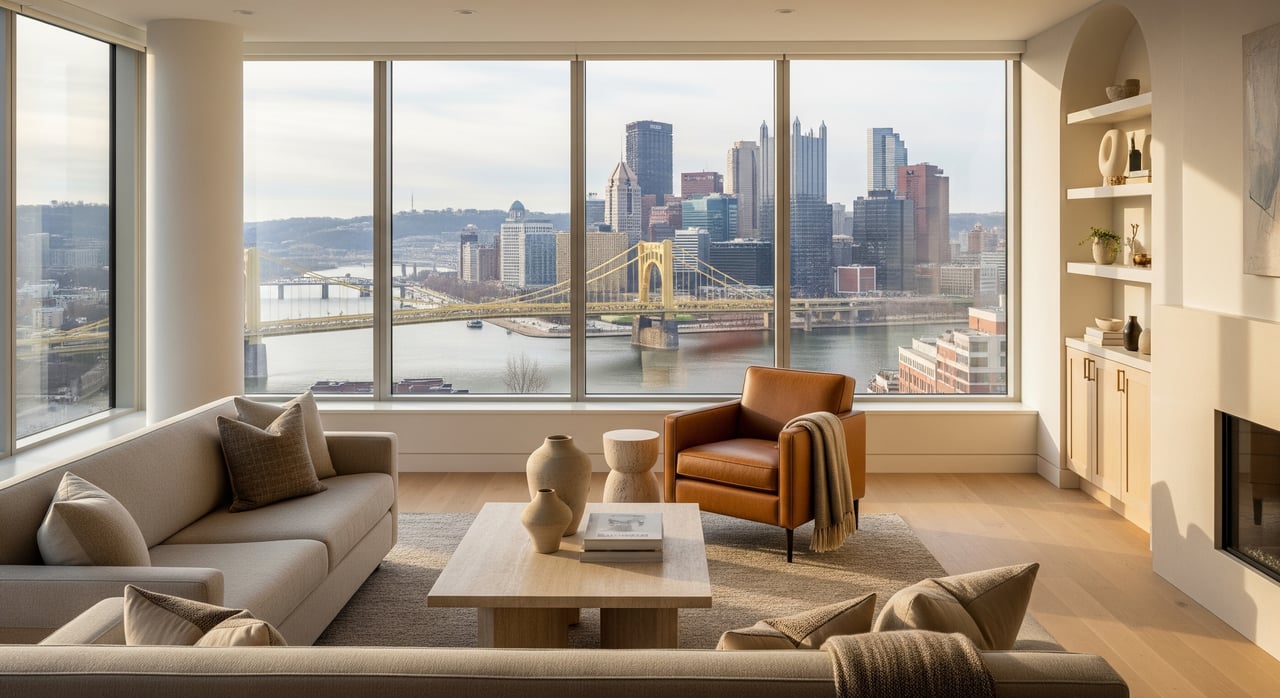
Ready to make an offer on a Pittsburgh home but not sure how to win without taking on too much risk? You are not alone. In Allegheny County, competition can swing from calm to fast-moving depending on the neighborhood, price point, and time of year. In this guide, you will learn the exact building blocks of a strong offer, how to tailor them to Pittsburgh’s micro-markets, and practical steps to prepare so you can move quickly with confidence. Let’s dive in.
Know the Pittsburgh playing field
Competition in Pittsburgh is hyper-local. Central neighborhoods like Shadyside, Squirrel Hill, Lawrenceville, East Liberty, and the South Side often see multiple offers, especially for move-in-ready homes. Meanwhile, some suburbs and other city pockets may have longer time on market. Your strategy should match the specific street and segment you are targeting.
Demand is shaped by university and health system hubs, as well as buyer interest in single-family homes. You may see aggressive bidding in one area while another area feels more balanced. The key is to decide how competitive you need to be for each property rather than using a one-size-fits-all approach.
Build a strong offer from core pieces
A competitive offer is more than price. Sellers and listing agents look for certainty, clarity, and a clean path to closing. Here are the parts that matter most and how to use them.
Price and escalation strategy
- Start with recent comparable sales and current activity to set a realistic ceiling you are comfortable with. In hot submarkets, offers above list price are common.
- Consider an escalation clause that raises your price by a set increment above any verified competing offer, up to a capped maximum. This can help you win without showing your top price upfront. The clause must be drafted carefully, require written proof of the competing offer, and comply with local MLS rules.
- Provide proof of funds for your down payment and closing costs. If you are all cash, include proof of full purchase funds.
Earnest money that signals commitment
- Earnest money deposits typically range around 1 to 3 percent of the purchase price, although local practice varies. A larger deposit can show seriousness.
- Some buyers make a portion of their deposit non-refundable after certain contingencies are removed. This increases perceived certainty but raises your risk. Know your comfort level before you commit.
Contingencies that balance risk and appeal
- Inspection contingency: You can keep a standard inspection, shorten the inspection window, or make it informational only. Waiving inspection may strengthen your offer, but it introduces risk of unknown repairs. If risk is high, consider targeted pre-offer checks where feasible.
- Financing contingency: Shorter timelines and full pre-approval or pre-underwriting from your lender make your offer stronger. A conditional loan commitment signals you are ready to close.
- Appraisal contingency: If price is likely to appraise below the contract price, an appraisal gap guarantee can reassure the seller. You agree to bring a set amount of extra cash if the appraisal is short. Make sure the cap is within your budget.
- Sale-of-home contingency: This is usually weaker in multiple-offer situations. If possible, avoid it when competition is high.
Closing timeline and possession terms
- Offer a timeline that aligns with the seller’s needs. A quick close can stand out if your lender can deliver. Flexibility can also win, such as allowing the seller a short rent-back period after closing if they need time to move.
- Ask the listing agent about preferred dates and minor requests that matter to the seller. Matching the seller’s logistics without adding risk to you can be a simple differentiator.
As-is terms and seller concessions
- Agreeing to buy as is or limiting repair requests reduces the seller’s exposure and can be attractive. Balance this with the property’s age and condition. Hidden defects can be costly if you skip protections.
- You can offer to pay certain seller costs or include a home warranty if it fits your budget. Keep these items targeted so your overall price and terms remain clear.
Documentation that instills confidence
- A full pre-approval or pre-underwritten letter is stronger than a pre-qualification. This tells the seller your loan has a clear path.
- Include clear proof of funds for your down payment or full purchase price if paying cash.
- Submit a complete, clean package with signed contracts, required addenda, and disclosures. A well-organized offer reduces friction and signals reliability.
Legal and process basics in Allegheny County
Standard forms and timelines
Many local agents use Pennsylvania Association of REALTORS forms. These include common contingencies and addenda. Timelines are negotiable, but local ranges are typical and influence seller confidence. Changing a standard time period can affect how your offer is received.
Seller disclosures and property conditions
In Pennsylvania, sellers commonly complete a Seller’s Property Disclosure Statement, and homes built before 1978 require federal lead-based paint disclosures. Disclosures are a helpful start, but you should still consider inspections.
Closing costs and transfer taxes
In Allegheny County, you will see transfer taxes, recording fees, title insurance, and lender charges on your closing statement. Who pays what can be negotiated and is guided by local custom and the listing. Ask your agent or title partner to estimate your total cash to close early in the process.
Fair Housing and personal letters
Some buyers write personal letters to sellers. Be cautious. Content that touches on protected characteristics can raise Fair Housing concerns. Keep any communication neutral and focused on the property itself, and follow your brokerage and MLS guidance.
Appraisals and lender rules
Lenders follow appraisal and underwriting standards. Sellers tend to prefer buyers with a clear path to final approval. Cash offers remove lender appraisal requirements, although you may still choose to inspect for your own protection.
Three winning strategies to consider
Strategy 1: Strong price with standard protections
Use a solid price at or above list with standard inspection and financing contingencies, reasonable timelines, and a clean package. This is common in moderately competitive scenarios. It balances protection and appeal, and it often wins when the competing offers are similar in price.
Strategy 2: Escalation clause plus proof of funds
Escalation helps you stay competitive without guessing too high. Pair it with strong proof of funds and a larger earnest deposit for added certainty. Make sure the clause requires written evidence of the competing offer and is drafted to comply with local rules.
Strategy 3: Speed and certainty
When a property draws multiple offers in places like Shadyside, Squirrel Hill, Lawrenceville, or the Strip District, sellers often value a fast, low-friction close. Pre-underwriting, a shortened inspection window, a clear appraisal plan, and flexible possession terms can tip the scales, even against a slightly higher price.
Scenario snapshots
- Hot urban listing with multiple offers: Consider an escalation clause, larger earnest money, a short inspection period or informational inspection, and pre-underwritten financing.
- Suburban home with moderate activity: A competitive price, standard contingencies, and a closing date tailored to the seller can be enough.
- Older property with potential system issues: Keep inspections in place. You can still compete with price, clear proof of funds, and flexible timelines rather than waiving key protections.
Step-by-step plan to prepare your offer
- Secure financing strength
- Complete a full pre-approval or, ideally, pre-underwriting with your lender.
- Gather proof of funds for your down payment or for the full purchase price if paying cash.
- Set your strategy and limits
- Decide on your offer price, your escalation cap if used, and your earnest money amount.
- Choose your inspection approach and timeframe. Local practice often uses 7 to 10 days, but you can shorten it if you have capacity to schedule quickly.
- Set your financing contingency timing. Many deals use about 21 to 30 days for loan commitment.
- Plan for appraisal. If you are including an appraisal gap, define the exact amount.
- Align on timeline and possession
- Propose a closing date your lender can support. Many closings run 30 to 60 days, depending on loan type.
- Offer flexibility on possession or a short leaseback if the seller needs time.
- Confirm required forms and disclosures
- Include any applicable addenda, such as lead-based paint for homes built before 1978, and county or state disclosures.
- Package it cleanly
- Submit a complete, signed contract with all exhibits and proof attached. A neat, complete offer often reads as less risky to the seller.
Common mistakes to avoid
- Overbidding without a plan for a possible appraisal shortfall. Know how you will cover any gap or define your cap in writing.
- Waiving inspection without understanding the property’s age and systems. If you remove protections, consider targeted checks before finalizing.
- Relying on a basic pre-qualification instead of a full pre-approval or conditional commitment.
- Using a poorly drafted escalation clause. Incomplete terms or missing proof requirements can cause confusion or weaken your position.
How we help you compete
You deserve a strategy that fits Pittsburgh’s micro-markets and your risk tolerance. Our approach is concierge and data-first. We analyze comparable sales and active competition, help you choose the right escalation structure and deposit strategy, and coordinate pre-underwriting so you present as a low-risk buyer.
If you are relocating to a hospital or clinic appointment, our ReloDoc workflow streamlines your timeline with preferred lenders, scheduling support, and on-the-ground previews in neighborhoods like Mt. Lebanon, Upper St. Clair, Shadyside, Squirrel Hill, Lawrenceville, the Strip District, and Fox Chapel. For busy professionals, we keep the process simple, proactive, and private so you can act fast when the right home hits the market.
Ready to compete with confidence while protecting your interests? Connect for a custom plan that fits your goals and the neighborhood you love. Start your move with Kevin C. Schwarz, Real Estate Agent.
FAQs
What makes an offer competitive in Pittsburgh?
- Sellers look for price, clean contingencies, strong financing or cash proof, and a closing timeline that matches their plans. Certainty and clarity often beat small price differences.
How does an escalation clause work in Allegheny County?
- You set a base price, a raise amount, and a cap. Your offer jumps above a bona fide competing offer by the set increment up to the cap, and you require written proof of the competing offer.
Should I waive the inspection to win a bidding war?
- It can strengthen your offer but raises risk. Consider shortening the inspection window or making it informational only, and weigh targeted pre-offer checks if the property is older.
How much earnest money should I put down in Pittsburgh?
- Local practice varies, but many buyers use about 1 to 3 percent of the price. A larger deposit can show seriousness, especially in multiple-offer situations.
What timelines are typical for closing in Allegheny County?
- Inspections often run 7 to 10 days, loan commitment about 21 to 30 days, and closing 30 to 60 days depending on loan type and seller needs.
Are buyer letters to sellers allowed in Pittsburgh?
- Practices vary by brokerage and MLS. If used, keep content neutral and property-focused to avoid Fair Housing concerns, and follow your agent’s guidance.