If you have ever pulled up to a Pittsburgh showing and wondered, Where would I actually park here in January?, you are asking exactly the right question. In this city, parking is not just about whether a listing says “garage” or “street parking.” It is about access, permits, alley use, street-cleaning days, and what happens when snow starts piling up. If you want a home that works well in real life, not just online, this guide will help you know what to look for before you write an offer. Let’s dive in.
Why parking hits different in Pittsburgh
In Pittsburgh, parking often functions as an access issue as much as a convenience issue. City rules for curb cuts show that in several higher-density zoning districts, curb cuts are restricted to alleys in order to preserve the built environment and reduce disruption to pedestrians and on-street parking. The city also defines an alley as a public right-of-way under 33 feet wide that typically serves the rear of building parcels.
That matters because one home can involve several moving parts at once. You may be looking at a front street, a rear alley, a garage opening, and a winter snow-storage plan all in the same showing. Two homes with similar square footage can feel very different day to day if parking works smoothly at one and creates friction at the other.
For busy professionals, relocation buyers, and anyone juggling work and family logistics, that difference is not minor. It affects unloading groceries, hosting guests, leaving early for work, and dealing with storms. In a market like Pittsburgh, those practical details deserve real attention.
How to evaluate parking on a tour
Check the actual parking type
Start by identifying how the home is meant to function. Is parking on-street, in a garage, on a pad, via a driveway, or through a rear alley? The answer shapes how convenient the property will feel every day.
Do not stop at the listing remarks. At a showing, it helps to picture your normal routine and ask yourself how you would arrive, unload, turn around, and leave. A setup that looks fine for a quick visit may feel very different during a snowy week or a busy workday.
Confirm off-street access is permitted
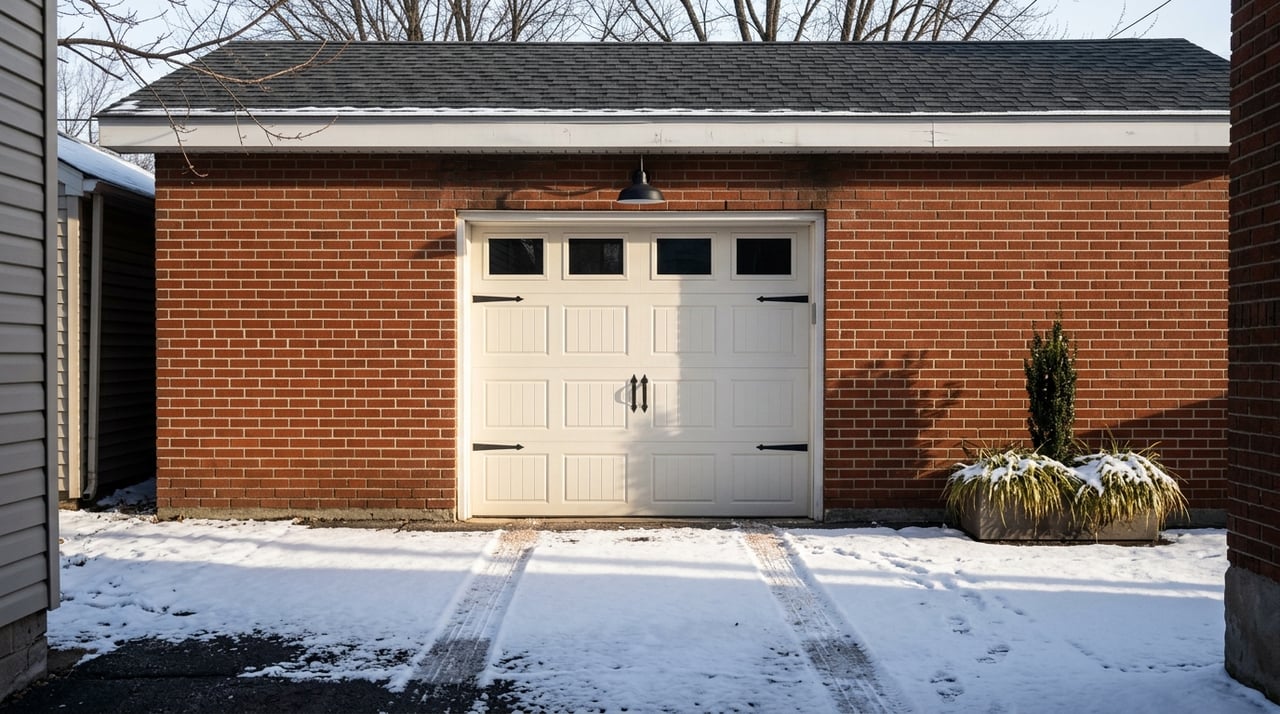
If a property has a driveway, parking pad, or garage, confirm whether the access is already a permitted curb cut. The City of Pittsburgh requires a Curb Cut Permit for all new curb cuts serving off-street parking, including driveways, residential garages, parking pads, parking lots, and commercial garages. The city also notes that existing curb cuts can require review if the use changes, more spaces are added, or the cut is modified or repaired.
That means a future parking improvement should be treated as a permit question first and a construction question second. If you are counting on adding a pad or changing access after closing, it is smart to understand that the city reviews curb cuts case by case and does not guarantee approval for non-standard designs.
Look closely at on-street parking
If the home depends on curb parking, verify whether the address is in a Residential Parking Permit district. In Pittsburgh, the Residential Parking Permit program applies only in specific districts, uses plate-based enforcement, and currently costs $40 per vehicle per program year plus a $10 annual visitor pass per address, along with small processing fees. The Pittsburgh Parking Authority also states that prices are not prorated mid-year.
This is where block-level reality matters. Even if a home sits in a permit district, you still want to know how many household cars the block can realistically absorb and how easy it is for visitors to park nearby. A permit can help, but it does not create extra curb space.
Ask about street-cleaning days
Street-cleaning enforcement resumed effective April 1, 2025, with posted signs in neighborhoods. If a home relies on street parking, ask which days apply to that block and where you would move your vehicle when cleaning is scheduled. This is one of those small details that can become a weekly headache if you do not plan for it.
For many buyers, especially those relocating to Pittsburgh, this is easy to miss during a quick tour. Looking for posted signs and asking direct questions upfront can save you from surprises later.
Why alley access can make or break a home
Understand what the alley actually does
In Pittsburgh, alley access can be a real asset, but only if it functions well for the way you live. The city describes alleys as the lowest-order streets that typically provide rear service access, and in some dense districts, curb cuts are restricted to alleys. That means the alley may be more than a secondary feature. It may be the practical route for your daily parking.
When you tour a home with alley access, ask whether the alley is truly the main access route, the usual delivery route, or simply a narrow strip behind the property. Those are very different situations. A listing may say “rear access,” but you want to know how that plays out on a normal Tuesday and during a winter storm.
Check turning, clearance, and daily use
An alley setup may look workable until you think through the details. Can you pull in without a complicated multi-point turn? Can a visitor, contractor, or delivery truck reach the property without blocking traffic or a neighbor’s access?
In tighter city blocks, practical circulation matters as much as legal access. A garage or pad that technically exists may still feel awkward if the alley is narrow, busy, or hard to navigate. That is why showing-day questions can be so valuable.
Shared driveways need extra diligence
Shared driveways deserve a closer look because convenience can disappear fast if expectations are unclear. If a home uses a shared driveway, ask who clears snow, who pays for upkeep, and what happens when both households need to move cars during a storm. These are simple questions, but they reveal a lot about how easy the setup will feel.
This is especially important if you have a tight schedule or expect regular comings and goings. A shared arrangement can work well, but only when access and responsibilities are clear. The goal is to understand not just the physical layout, but the day-to-day reality.
What changes during Pittsburgh snow days
Snow can reshape your parking plan
The City of Pittsburgh says its snow and ice program is designed to keep traffic moving on more than 1,200 miles of streets and to maintain access on residential streets and alleyways. The city asks residents to avoid parking on corners, move vehicles off the street if possible, and avoid parking too far into the street so plows can work. In heavy snow, the city also says parking spaces may need to be used for snow storage.
That last point matters more than many buyers expect. A block that feels manageable in dry weather can become much tighter when plowed snow takes up curb space. If a home depends heavily on on-street parking, think about where your car would go not just on an average day, but during a long snow week.
Know the city’s snow rules
The city also asks residents not to shovel snow into the roadway and not to push snow from a car into the street. If a street still needs treatment after a storm, the city says to report it 24 hours after snowfall ends. For buyers evaluating a property, this reinforces a bigger point: snow removal is not just about sidewalks. It directly affects how parking and access work.
If the home uses an alley or shared driveway, ask where snow is usually piled without blocking access. That answer can tell you a lot about how practical the property will be in winter.
Use snow tools carefully
Pittsburgh’s Snow Response page can be useful for planning, but the city says its dashboard is delayed and not comprehensive. It is best treated as a planning tool, not a live, fully complete snow map. If winter reliability matters for your commute, it helps to treat online tools as one piece of the picture rather than the whole story.
For drivers in Pennsylvania, PennDOT also advises avoiding unnecessary winter travel, clearing snow and ice from windows, mirrors, lights, hood, and roof before driving, and not parking or abandoning vehicles on snow emergency routes. If your routine involves regular travel during bad weather, these practical considerations should be part of your home search.
Questions to ask before you make an offer
If parking is likely to affect your daily routine, these are smart questions to ask during a showing or before you submit an offer:
- Is the parking on-street, in a garage, on a pad, via a driveway, or through an alley?
- If it is off-street, is the curb cut already approved?
- Is the home in a residential parking permit district?
- How many household cars can the block realistically handle?
- What are the street-cleaning days on this block?
- Where would your car go on cleaning days or during snow removal?
- If there is a shared driveway or rear alley, who clears snow and handles repairs?
- Where does snow get piled without blocking access?
- Can a delivery truck, guest, or contractor reach the property without disrupting traffic or a neighbor?
- If you want to change the parking setup later, would that require a new permit or exception?
These questions are practical, but they are also strategic. They help you judge whether a home will support your routine with minimal friction.
A smarter way to compare Pittsburgh homes
When buyers compare homes in neighborhoods like Lawrenceville, Shadyside, Squirrel Hill, or the Strip District, parking can be the quiet factor that changes the whole equation. A property that looks similar on paper can live very differently depending on whether access comes from the street, a rear alley, a garage, or a shared drive. In Pittsburgh, that is not a minor footnote. It is part of the home’s operating system.
That is why a concierge-style home search should look beyond finishes and square footage. You want to know whether the property will let you park, unload, host guests, manage winter weather, and move through your week without constant workarounds. Analytical, local guidance can make those tradeoffs much easier to spot before you commit.
If you want help evaluating how a home will function beyond the listing photos, Kevin C. Schwarz, Real Estate Agent offers concierge, neighborhood-specific guidance for buyers across Pittsburgh and the inner-ring suburbs.
FAQs
How does Pittsburgh residential permit parking work for homebuyers?
- Pittsburgh’s Residential Parking Permit program applies only in specific districts, uses plate-based enforcement, and currently costs $40 per vehicle per program year plus a $10 annual visitor pass per address, with small processing fees.
What should you ask about alley access at a Pittsburgh showing?
- Ask whether the alley is the practical daily access route, the delivery route, or just a narrow rear right-of-way, and whether it works easily for parking, turning, and winter access.
Do Pittsburgh homes need approval for new driveways or parking pads?
- Yes. The City of Pittsburgh requires a Curb Cut Permit for all new curb cuts serving off-street parking, and some changes to existing curb cuts can also require review.
What should Pittsburgh buyers know about street-cleaning and parking?
- Street-cleaning enforcement is active, posted signs are used in neighborhoods, and you should ask where your car would go on scheduled cleaning days.
How does snow affect parking at Pittsburgh homes?
- Snow can reduce available curb space, affect alley and driveway access, and require snow storage in parking areas, so buyers should ask how winter parking works before making an offer.
Why do shared driveways matter in Pittsburgh home searches?
- Shared driveways can affect access, repairs, and snow clearing, so it is important to ask who handles upkeep, who clears snow, and how vehicle movement works during storms.