If you are trying to choose a Pittsburgh neighborhood, the real question usually is not “Which area is best?” It is whether you want daily convenience at your doorstep or a little more breathing room on your block. That choice affects how often you drive, how you think about parking, and what kind of home may fit your life best. This guide will help you compare walkable neighborhoods and quieter streets in Pittsburgh so you can narrow your search with more confidence. Let’s dive in.
Pittsburgh Neighborhoods Fall on a Spectrum
In Pittsburgh, walkability is not an all-or-nothing feature. It is more of a spectrum, with highly walkable areas like South Side Flats at 93, Bloomfield at 92, and Shadyside at 91, and quieter, more residential neighborhoods like Morningside at 50 and Stanton Heights at 32.
That spread matters because it reflects how each area functions day to day. Some neighborhoods are built around errands, dining, and transit access, while others are centered more on homes, trees, and lower-traffic streets.
What Walkable Living Looks Like
If you want to grab coffee, pick up dinner, or run basic errands without getting in the car every time, Pittsburgh has several neighborhoods that support that lifestyle well. In these areas, convenience often comes from a denser street pattern, active retail corridors, and more people moving through the neighborhood.
That usually means a tradeoff. The same features that make an area feel lively and convenient can also mean tighter parking, more activity, and less of a buffer between your home and nearby businesses.
Bloomfield Offers Daily Convenience
Bloomfield is one of the clearest examples of a highly walkable Pittsburgh neighborhood. It has one of the city’s largest and most active business districts along Liberty Avenue, a Walk Score of 92, and roughly 94 restaurants, bars, and coffee shops.
The city also notes that homes here are often passed down through families, which speaks to the neighborhood’s long-standing residential roots. For you as a buyer, Bloomfield can appeal if you want a strong neighborhood feel with everyday amenities close by.
Shadyside Blends Housing Types and Access
Shadyside is another top walkable option, with a Walk Score of 91 and about 112 restaurants, bars, and coffee shops. The housing mix is broad, from larger homes on Fifth Avenue to cottage courts and smaller apartments.
The neighborhood fact sheet shows that 72.1% of housing is renter-occupied. That does not make it better or worse, but it does tell you something useful about the local housing mix and likely buyer or renter demand.
Lawrenceville Gives You Block-by-Block Variety
Lawrenceville is especially helpful if you want walkability but also want to compare different housing types within one larger area. Central Lawrenceville scores 84 and Lower Lawrenceville scores 86 on Walk Score, with the Butler Street business district serving as a major draw.
The city notes that eastern Lawrenceville has larger single-family brick homes, while areas closer to Downtown include reclaimed rowhouses and newer townhomes. If you like urban convenience but want flexibility in housing style, Lawrenceville often deserves a close look.
The Strip District Feels Active and Evolving
The Strip District has changed from an industrial area into a major retail, dining, and residential corridor. It carries a Walk Score of 76 and has about 95 restaurants, bars, and coffee shops.
It is also a good reminder that walkability can come with real parking considerations. The city is conducting a 2026 parking study there to balance business turnover with resident and employee parking needs, which shows how active mixed-use areas often need more structured parking management over time.
Hybrid Neighborhoods Can Offer Balance
Not every buyer wants the busiest streets or the quietest ones. Many people want something in the middle, where you can still enjoy some walkability while keeping a more residential feel.
In Pittsburgh, several neighborhoods fit that middle ground well. These areas can work if you want access to business districts or parks without living in the center of the busiest retail corridors.
Squirrel Hill South Balances Access and Energy
Squirrel Hill South is a strong hybrid example. It has a Walk Score of 74, sits between Frick and Schenley Parks, and includes the Murray and Forbes business district.
The neighborhood fact sheet shows a mix of 44.8% owner-occupied housing and 55.2% renter-occupied housing. For many buyers, that balance can signal a neighborhood that offers both activity and a broad housing mix.
Point Breeze Leans Residential
Point Breeze has a Walk Score of 66 and tends to feel more residential than the city’s core mixed-use districts. The fact sheet shows 62.4% owner-occupied housing, and the area has access to Frick Park, Mellon Park, Nine Mile Run, and Westinghouse Park.
Point Breeze North sits at the same Walk Score and is described by the city as an early planned suburban development with wide divided streets and a mix of apartments and larger homes. If you want some access without the intensity of a busier corridor, Point Breeze may fit your style.
Regent Square Sits in the In-Between Zone
Regent Square is another useful reference point for buyers looking for balance. The Pittsburgh portion includes the South Braddock business district and immediate access to Frick Park, and the fact sheet shows 74.9% owner-occupied housing.
One important detail is that the broader Regent Square area extends beyond Pittsburgh city limits into Edgewood, Swissvale, and Wilkinsburg. If city boundaries matter to you for your search, that is worth keeping in mind.
Quieter Pittsburgh Streets Offer a Different Lifestyle
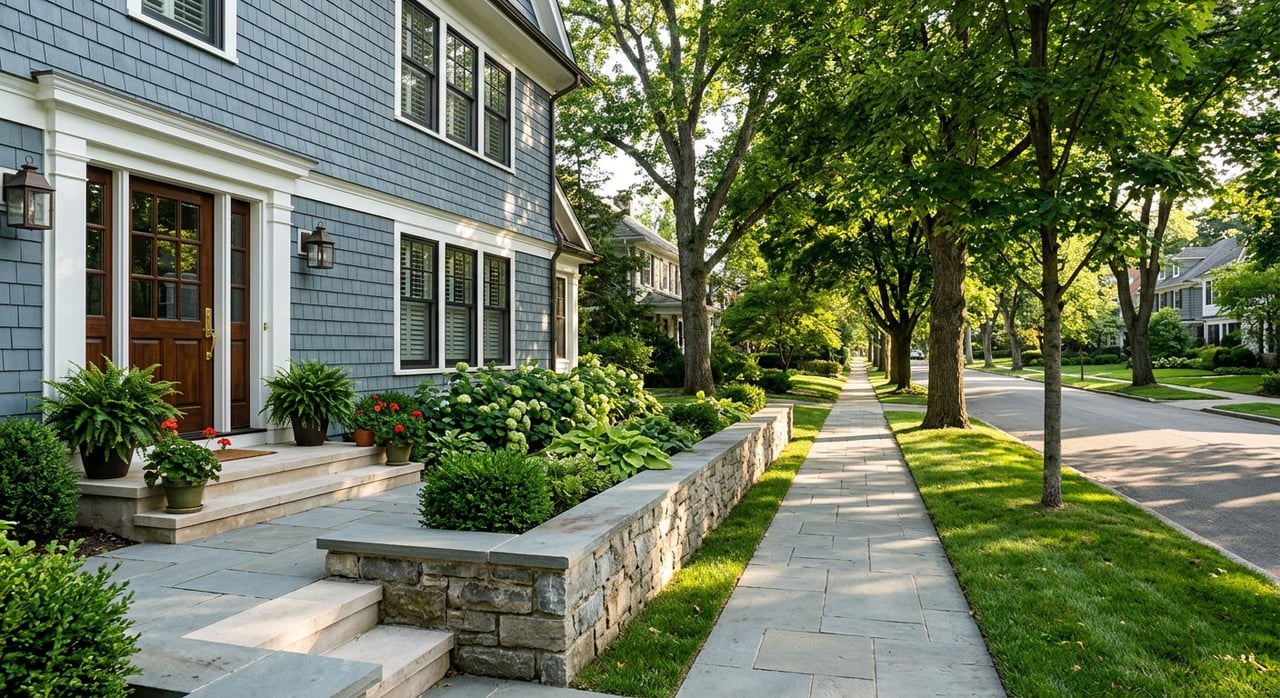
If your priority is a more residential setting, quieter neighborhoods inside the city can offer a very different day-to-day experience. These areas tend to emphasize homes, mature trees, and easier parking over dense retail clusters.
That does not mean you give up convenience entirely. It just means the neighborhood is usually designed more around residential living than around constant foot traffic and storefront activity.
Highland Park Mixes Green Space and Homes
Highland Park has a Walk Score of 61, which puts it in a middle-to-quieter range. The city describes tree-lined streets and a housing mix that includes Victorian, Tudor, and Colonial homes, while Walk Score lists about 22 restaurants, bars, and coffee shops.
For buyers who want architectural character and a calmer feel without feeling disconnected from the city, Highland Park often stands out.
Morningside Feels Calm and Residential
Morningside scores 50 on Walk Score. The city describes it as a quiet residential community with tree-lined streets and well-kept brick homes, and Walk Score lists about 23 restaurants, bars, and coffee shops.
If you picture home as a place with less traffic and a more tucked-away feel, Morningside may be closer to what you want than a busier, mixed-use district.
Stanton Heights Has a Suburban Feel
Stanton Heights is one of the clearest examples of a suburban-feeling neighborhood within Pittsburgh. The city describes new homes, quiet streets with little traffic, and a suburban character, while the fact sheet shows 81.3% owner-occupied housing.
Its Walk Score is 32, which signals a much more car-dependent lifestyle. If your priority is calm streets and a residential setting first, Stanton Heights may align better than a more walkable neighborhood.
Parking and Noise Matter More Than You Think
When buyers compare walkable areas with quieter streets, parking and noise are often where the decision becomes real. It is easy to focus on charm or curb appeal at first, but your daily routine usually tells the truth.
In active mixed-use neighborhoods, on-street parking can be more competitive. Pittsburgh’s Residential Parking Permit program exists to help preserve resident parking near commercial zones, but the city notes that permits do not guarantee a space.
That is an important point if you expect to rely on street parking most of the time. In some neighborhoods, a driveway, garage, or dedicated space may matter more than you initially think.
Resale Depends on Buyer Match
A common mistake is assuming walkable is always better for resale or that quieter streets always hold value better. In practice, the safer conclusion is that product-market fit matters more.
Highly walkable neighborhoods often pair strong business districts and higher walk scores with more renter-heavy housing profiles. Shadyside is 72.1% renter-occupied, and the Strip District is 91.8% renter-occupied, while Point Breeze, Regent Square, and Stanton Heights are much more owner-occupied.
That does not make one neighborhood type stronger across the board. It simply means future buyers may be drawn to the area for different reasons, and your best long-term move is often choosing a neighborhood that matches the lifestyle your likely future buyer will also want.
Questions to Ask Before You Choose
Before you narrow your search, it helps to pressure-test your own habits. The right neighborhood is usually the one that fits the life you already live, not the one that sounds best on paper.
Ask yourself:
- How often will you realistically want or need a car?
- Is on-street parking enough, or do you want a garage or driveway?
- Do you want restaurants and retail at the end of the block, or would you rather have a buffer?
- Are you looking for a rowhouse, condo, detached house, or a mix of housing options?
- If you sell later, is this neighborhood likely to attract buyers with priorities similar to yours?
How to Narrow Your Pittsburgh Search
If you are deciding between walkable living and quieter streets, it helps to compare neighborhoods in person and block by block. In Pittsburgh, small shifts in location can change the feel of a street, the available parking, and the type of housing around you.
A smart search is not just about picking a neighborhood name. It is about matching your routine, housing needs, and long-term goals with the right part of the city.
If you want help weighing walkability, parking, housing mix, and resale potential across Pittsburgh neighborhoods, Kevin C. Schwarz, Real Estate Agent can help you make a clear, data-informed decision with a concierge-level approach.
FAQs
What does walkability mean when choosing a Pittsburgh neighborhood?
- Walkability usually refers to how easy it is to reach daily needs like dining, coffee shops, errands, and other services without driving every time.
Which Pittsburgh neighborhoods are among the most walkable?
- South Side Flats, Bloomfield, and Shadyside are among the highest-scoring walkable neighborhoods mentioned here, with Walk Scores of 93, 92, and 91.
Which Pittsburgh neighborhoods feel quieter and more residential?
- Highland Park, Morningside, and Stanton Heights tend to offer a quieter, more residential feel with lower walk scores and less retail density.
Is parking harder in walkable Pittsburgh neighborhoods?
- It often can be, especially near active business districts, and Pittsburgh’s Residential Parking Permit program does not guarantee a parking space.
Is Squirrel Hill South a good middle-ground Pittsburgh neighborhood?
- Squirrel Hill South is a strong middle-ground option because it combines a Walk Score of 74 with access to parks and a vibrant business district.
Does a quieter Pittsburgh neighborhood always have better resale potential?
- Not necessarily. Resale often depends more on matching the home and neighborhood to the priorities of the likely future buyer than on whether the area is walkable or quiet.